AirBear On-the-Go
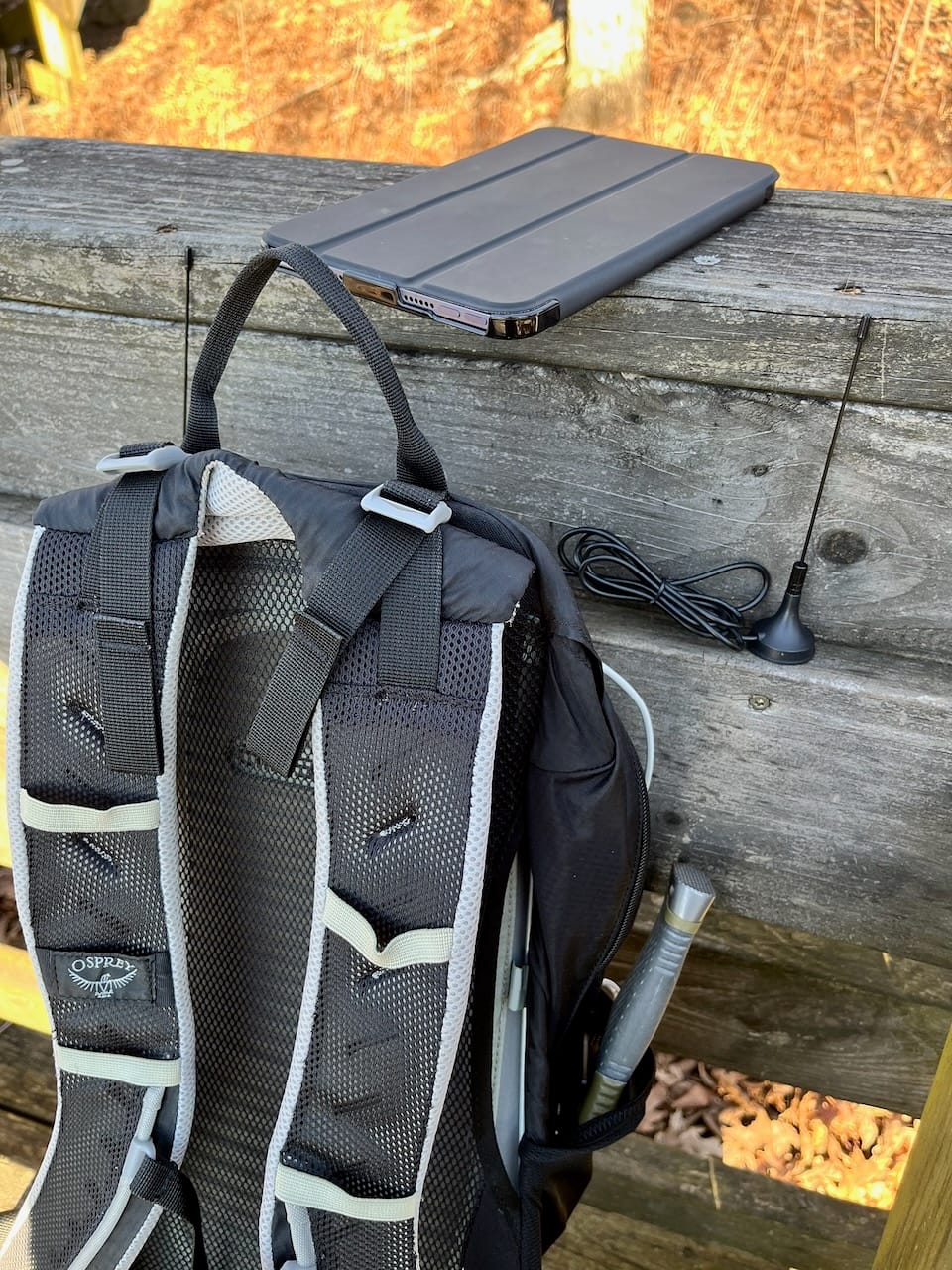
Integration testing and field testing is where you really find all of the kinks in a system.
I took AirBear (on an iPad), along with a Raspberry Pi and two RTL receivers + portable antennas + USB battery (and a baggie of baby carrots) on a little mini expedition to the top of the tallest mountain in the area.
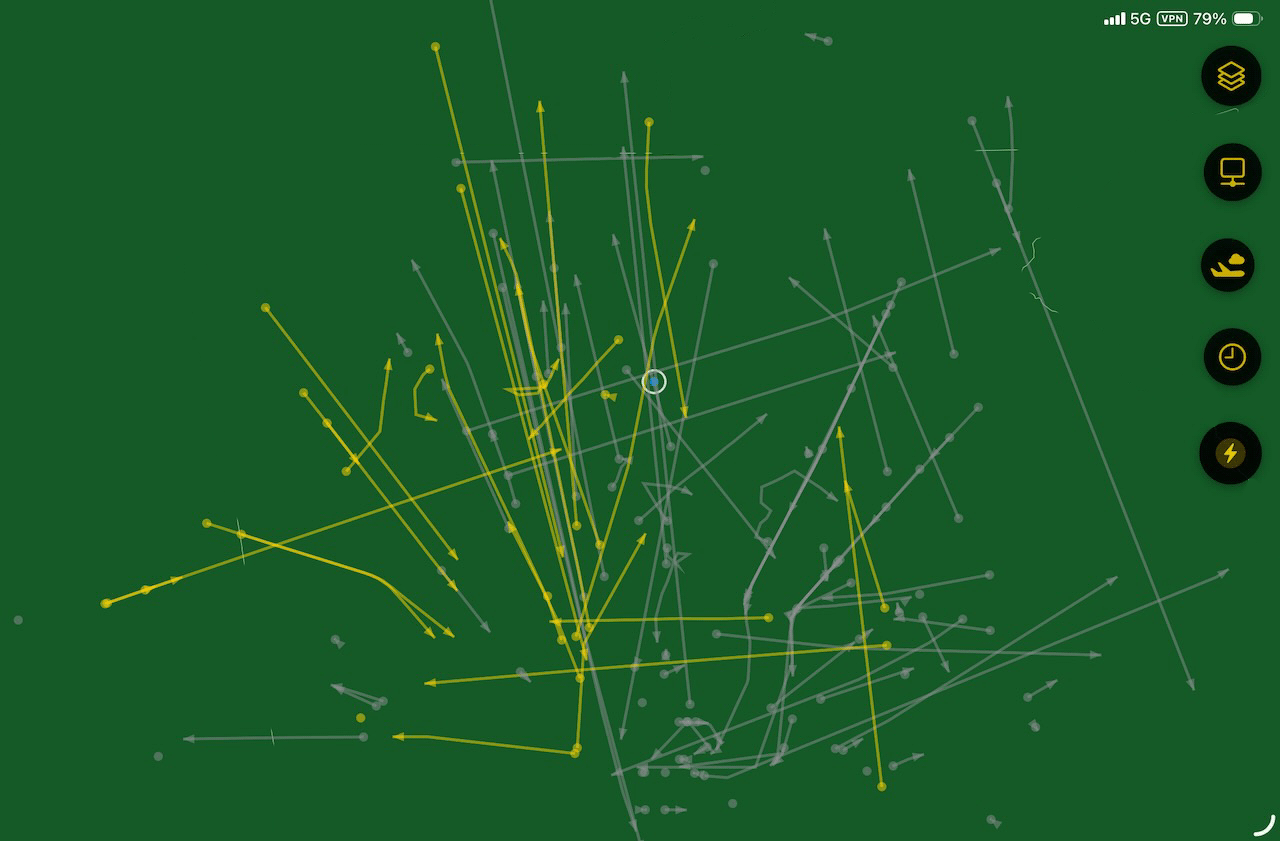
I haven't yet implemented a map "key" so you can't tell from the screenshot itself, but I got about 175 miles of coverage. The farthest data point I noticed was just under 100 miles away.
Let's talk about some lessons learned on a day trip where I didn't expect to learn anything.
Receivers Generate Heat
I turned everything on as I loaded it into my backpack when I left the house. This turned out to be a mistake. The RTL receivers generate a lot more heat than I realized. When I opened up the iPad as I reached the top of the mountain, I saw ... nothing. I initially thought I had some connectivity issue between the iPad and the Python program that implements BLE. It turns out that the receivers were just too hot to work.
After I pulled the receivers out of the backpack, they cooled off quickly and the map started filling up. Lesson learned there....
Multiple Receivers Don't Fit
I wanted to track both APRS and ADS-B (and one day, AIS!). I went to plug the 2nd RTL receivers into the R-Pi, and ... it won't fit. The receivers are too fat relative to the compact spacing of the USB ports on the R-Pi.
I dug around in my box of Very Important Cables That Should Never Be Discarded, and found two USB-A extension cables. I think they're both USB 2, so I also ordered some USB 3 replacements for another day.
Do Not Count on iOS for GPS
It is obvious in hindsight, but AirBear needs support for USB GPS. I ordered a basic one on Amazon. At times, my iPad would not tell me my current location. I know from experience that without cell service, CoreLocation is frequently useless. I think I had decent cell service for the duration of the hike, but who knows. Either way, I need to be able to attach a GPS to the Raspberry Pi and use that signal for AirBear.
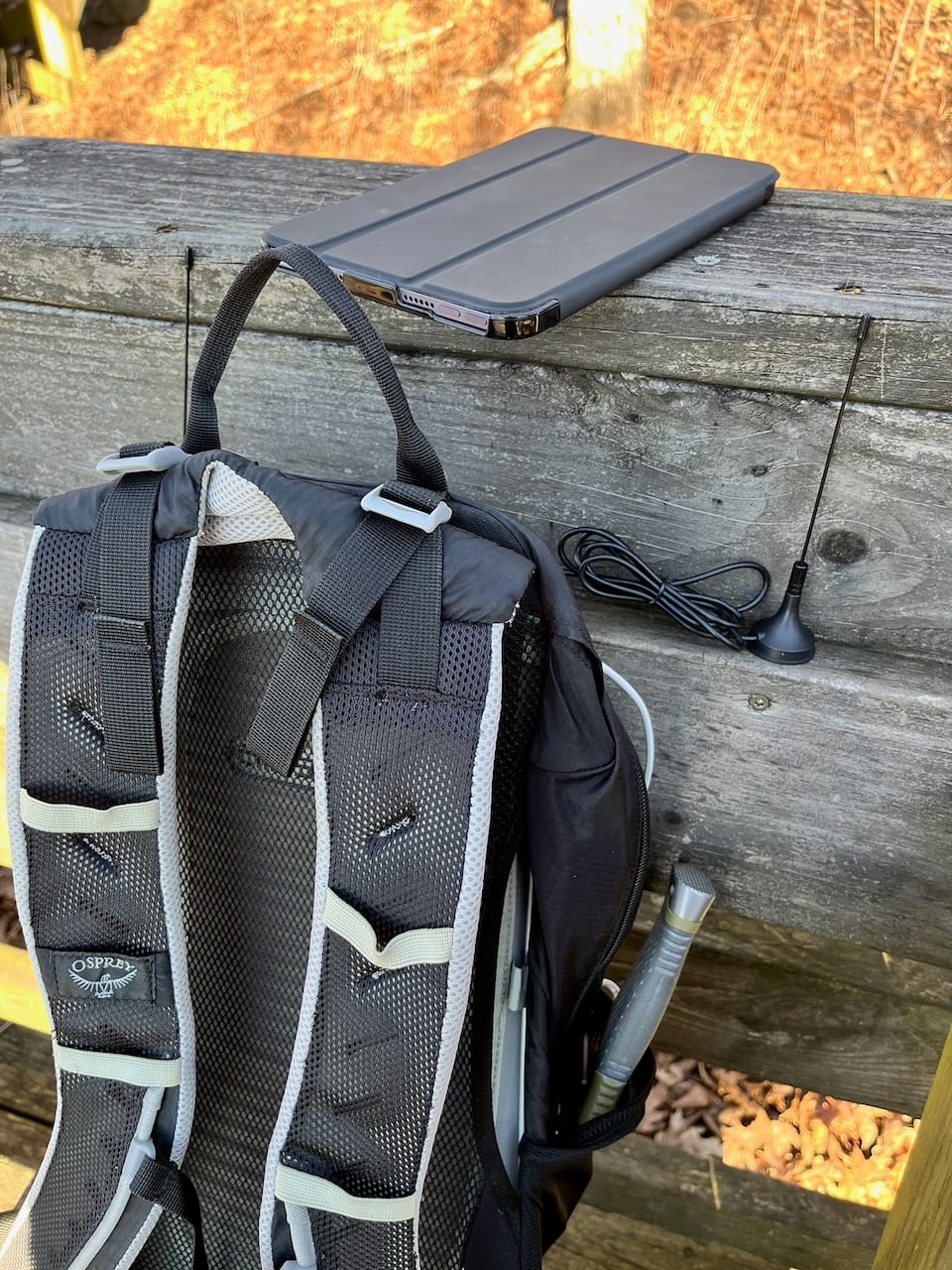
I've never been tempted to buy a 3D printer, but I'm suddenly interested. I'm picturing a custom case that fits the Raspberry Pi + two or three receivers (just the PCBs), a little fan, and some antenna ports integrated into the case. Having an integrated battery would be nice, but just being able to plug in a USB battery is far simpler.
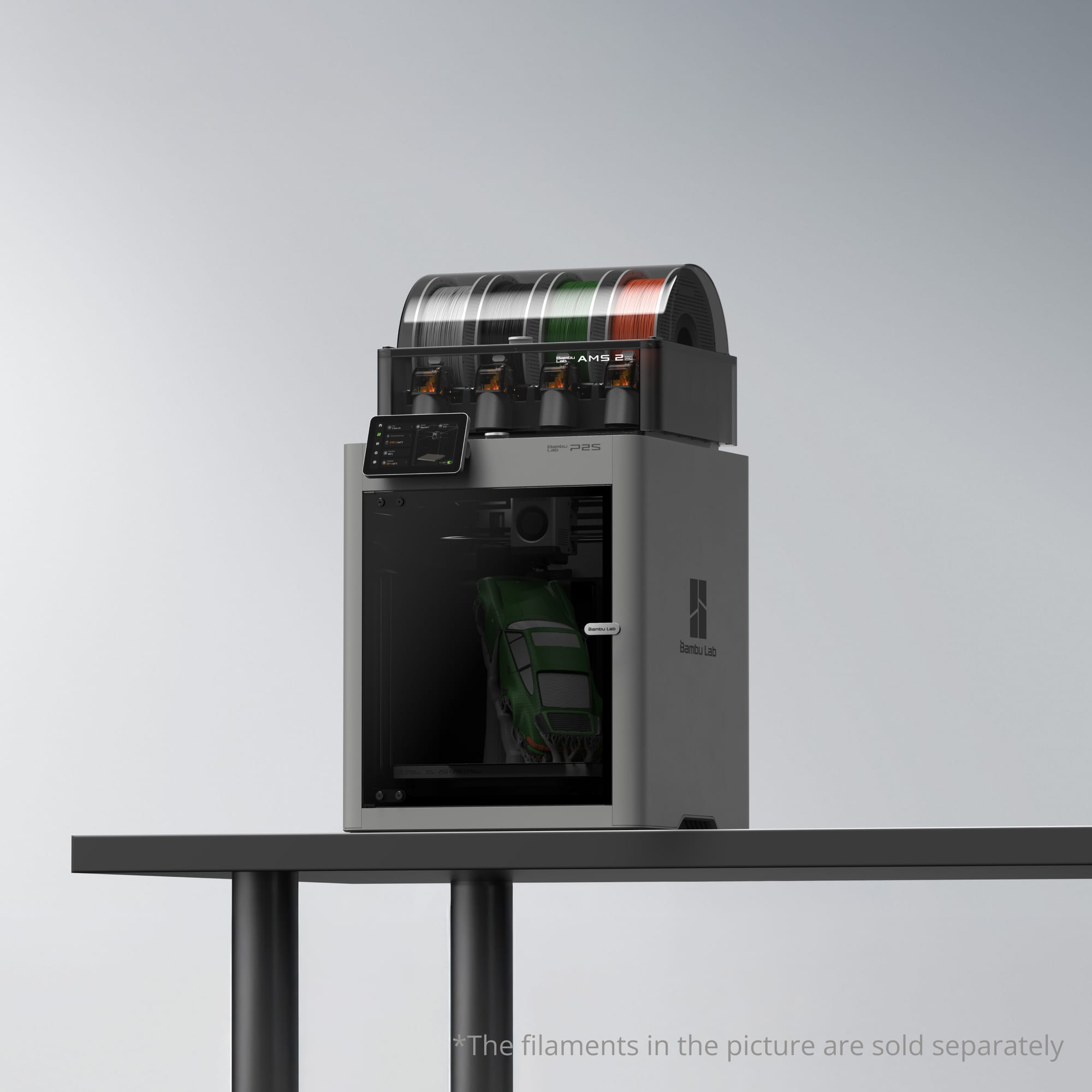
I don't know anything about the Bambu Lab PS2, but that's way cheaper than I expected.
AirBear for macOS and iOS will be available soon.